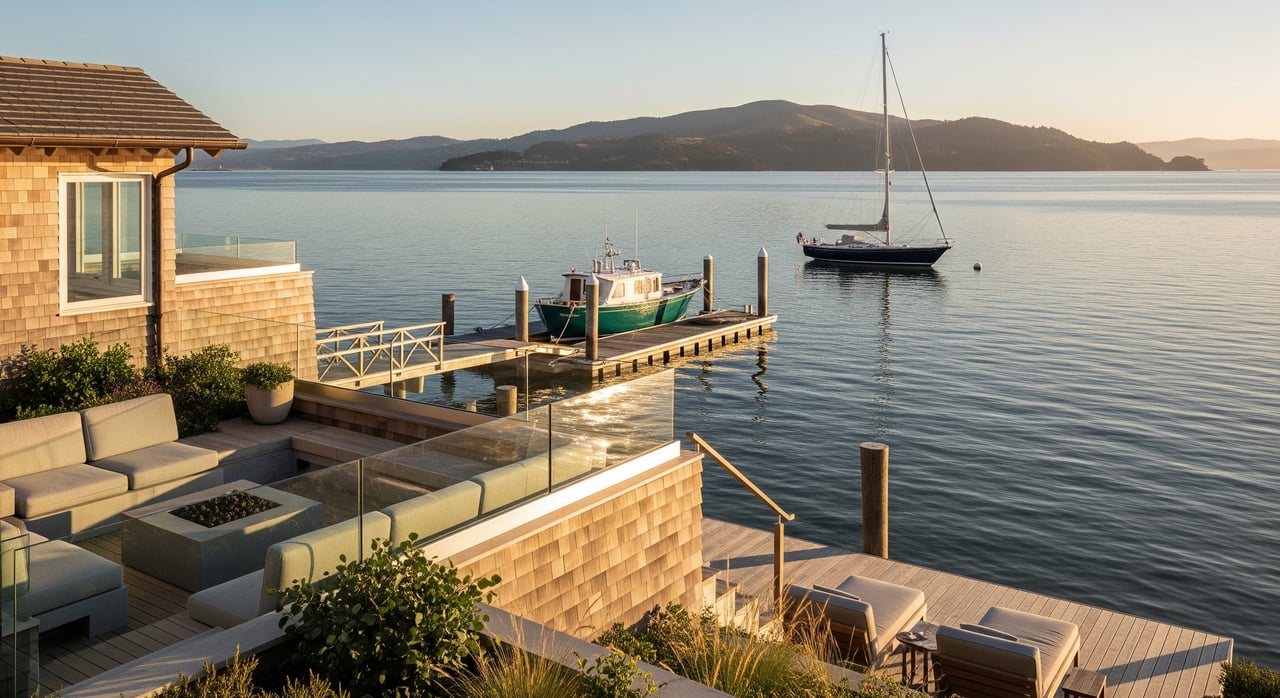
Waking up to the San Francisco Bay outside your window is hard to beat. If you are considering a move to Tiburon or Belvedere, the views, boat access, and quiet streets make waterfront living especially tempting. Still, buying on the water is different from buying inland. In this guide, you will learn the real pros and cons, the costs and risks to plan for, and a practical checklist tailored to Belvedere and Tiburon so you can move forward with confidence. Let’s dive in.
Why Tiburon and Belvedere waterfront
Belvedere is a small, primarily residential island community connected by causeway to Tiburon. It is known for luxury single-family homes, many right on the Bay, and a calm, low-density feel. Tiburon adds a lively downtown, marinas, and a ferry terminal, while still offering premium residential neighborhoods.
Waterfront homes here trade at a significant premium due to scarcity, unique views, and direct water access. Inventory stays tight, and sales can be less frequent because there are only so many true waterfront properties. That limited supply is part of the appeal when you want a rare, legacy property.
You also get lifestyle convenience. Many residents enjoy the option of the Golden Gate Ferry from Tiburon, which adds a pleasant, predictable commute alternative to driving across the Golden Gate Bridge. Most day-to-day services cluster in downtown Tiburon, and Belvedere residents typically use those amenities.
Top pros of living on the water
Signature views and access
You can enjoy panoramic views that take in Angel Island, the Golden Gate Bridge, the San Francisco skyline, and open Bay water. Direct access supports boating, kayaking, and relaxed waterside living. For many, the Bay itself becomes an extension of your outdoor space.
Private amenities
Many properties include private docks, slips, small beaches, terraced patios, and generous outdoor living areas. These features expand how you use the home, from easy boat days to quiet evenings by the water.
Market prestige and value
Waterfront homes typically command premium pricing because they are scarce and highly desirable. In coveted coastal markets, long-term appreciation can be strong, though it is never guaranteed. For some buyers, the status of owning on the Bay is part of the draw.
Ferry and local convenience
Proximity to the Tiburon ferry gives you commute and leisure flexibility, which many buyers value. Walkable dining, shops, and marinas add daily convenience and help the area feel both relaxed and connected.
Community and privacy
Belvedere in particular is known for a quiet, residential feel. The small-town character, low-density environment, and water-oriented setting appeal to buyers who value privacy and a calmer pace.
Key cons and recurring costs
Flooding and sea-level rise risk
Coastal flooding from high tides, storm surge, and strong winter storms already affects parts of the Bay shoreline. Long-term projections show increasing tidal flooding and coastal inundation in future decades. Before you buy, use the NOAA Sea Level Rise Viewer and regional planning resources from the Bay Conservation and Development Commission to understand parcel-level exposure today and under future scenarios.
Flood zones and insurance
Some shoreline areas fall within FEMA Special Flood Hazard Areas, which can trigger lender requirements for flood insurance. Pricing and availability change as insurers update risk models. Check current FEMA Flood Insurance Rate Maps using the FEMA Flood Map Service Center, and get written quotes for both National Flood Insurance Program and private-market coverage. For policy basics, review FEMA’s overview of the National Flood Insurance Program and ask your lender what they will require.
Permits and shoreline work
Shoreline projects such as dock construction, seawall repairs, bulkhead work, or shoreline stabilization usually need multiple approvals. Expect to work with city planning in Belvedere or Tiburon, the regional Bay regulator (the Bay Conservation and Development Commission), and in some cases federal agencies. Environmental review and mitigation are common and can add time and cost. Early feasibility consultations help you avoid surprises.
Maintenance and long-term repairs
Salt air, marine borers, and corrosion increase wear on pilings, decks, windows, metalwork, and exterior finishes. You will likely budget more for maintenance than for an inland home. Seawall or bulkhead repairs and future adaptation measures are often the owner’s responsibility and can be significant.
Environmental restrictions
San Francisco Bay supports sensitive habitats like eelgrass and salt marsh. Activities that disturb habitat, such as dredging or adding new structures, are tightly regulated. Ownership may not extend to the intertidal zone. The state’s public trust doctrine governs tidal lands and can limit private rights in those areas. The California State Lands Commission’s public trust overview is a helpful primer.
Resale and market liquidity
The buyer pool for premium waterfront homes is specialized and smaller. Listings can take longer to sell and may be more sensitive to market cycles and evolving climate perceptions. Plan for longer marketing timelines than a typical suburban sale.
Safety and emergency access
Low-lying roads and causeways can be vulnerable during king tides or strong storms. Know local evacuation routes and how access might change during extreme weather.
Buyer due-diligence checklist
Use this list to structure your discovery and protect your interests. Sellers can use it to prepare documentation that removes buyer doubt.
- Title and boundaries
- Confirm property lines, recorded easements, and rights-of-way. Clarify whether the foreshore or mean-high-tide area is under public trust or private ownership.
- Flood and sea-level exposure
- Check FEMA maps for current flood zone designation via the FEMA Map Service Center.
- Ask for an Elevation Certificate if available.
- Review parcel exposure using the NOAA Sea Level Rise Viewer and BCDC’s regional planning resources.
- Insurance and lending
- Get written quotes for flood insurance from both NFIP and private carriers and review deductibles and exclusions.
- Confirm what your lender requires if the home is in a Special Flood Hazard Area.
- Price out homeowner coverage limits for wind, water intrusion, mold, and earthquake.
- Structural and geotechnical inspections
- Order a full home inspection and a marine inspection for docks, pilings, and seawalls.
- Consider a geotechnical review if the site includes bluffs, steep slopes, or engineered fill.
- Permits and compliance
- Request records for docks, seawalls, shoreline work, and recent projects.
- Verify compliance with local permits, regional approvals through BCDC, and any federal permits.
- If you plan changes, consult a shoreline engineer and speak with local planning early to gauge feasibility.
- Utilities and systems
- Confirm sewer and stormwater function, drainage paths, and any history of saltwater intrusion.
- Ask about service interruptions during storms and how utilities are protected or elevated.
- Costs of ownership
- Budget for higher exterior maintenance, corrosion control, dock and piling upkeep, and possible future shoreline adaptation.
- Identify HOA or neighborhood assessments and any shared shoreline maintenance agreements.
- Neighborhood access and safety
- Learn which streets flood during king tides or storms and locate evacuation routes.
- Environmental constraints
- Check for conservation easements, habitat buffers, or mitigation obligations linked to past work.
Seller strategy for bayfront homes
Price and disclosure
Price to reflect both the desirability and the specialized buyer pool. Disclose known flood events, shoreline repair history, active permits, and any mitigation requirements. Providing insurance quotes and maintenance records helps buyers underwrite the property with confidence.
Pre-list inspections
Commission a structural inspection and a marine inspection for docks and seawalls. Address issues that can derail a sale or provide clear estimates up front. This reduces surprises during escrow and can support a stronger price.
Showcase resilience features
Highlight elevated systems, drainage improvements, recent seawall work, or flood vents. Buyers will value practical measures that reduce risk and maintenance.
Marketing and positioning
Emphasize lifestyle features like views, dock access, proximity to the ferry, and privacy. Pair that story with organized documentation so buyers can evaluate risk and cost with clarity.
Glossary of key terms
- Special Flood Hazard Area (SFHA): FEMA-designated zones with higher flood risk that commonly trigger lender insurance requirements.
- Elevation Certificate: A document that shows a structure’s elevation in relation to base flood elevation. Insurers and lenders use it to assess risk and cost.
- Public trust doctrine: State policy that protects public rights in navigable waters and tidelands. Private ownership often does not extend into the intertidal zone.
- BCDC: The Bay Conservation and Development Commission, which regulates San Francisco Bay shoreline development and leads regional sea-level-rise planning.
Is waterfront right for you?
If your top priorities are iconic views, direct water access, and a calm, residential setting, Tiburon and Belvedere deliver. Just go in with clear eyes about flood risk, insurance, maintenance, permitting, and resale timelines. With the right due diligence, waterfront living can be both a daily joy and a long-term asset.
If you want tailored guidance on a specific address, or you are preparing to list, reach out to Jeff Marples for a private consultation and a step-by-step plan.
FAQs
Do I need flood insurance for a Tiburon or Belvedere waterfront home?
- If your property is in a FEMA Special Flood Hazard Area, lenders typically require flood insurance; confirm with your lender and use the FEMA Map Service Center to check your zone.
How do permits work if I want a new dock in Belvedere or Tiburon?
- Shoreline projects often need approvals from the city and the regional Bay regulator; review guidance from the Bay Conservation and Development Commission and engage local planning early.
How should I evaluate sea-level rise for a bayfront property in Marin?
- Start with parcel visuals in the NOAA Sea Level Rise Viewer and then consult BCDC resources to understand regional scenarios and adaptation planning.
Who maintains a seawall or bulkhead on a private lot?
- Responsibility often rests with the upland owner up to the mean high tide line; confirm via your title report, recorded easements, and any neighborhood agreements.
Does bayfront ownership mean I have a private beach in Belvedere?
- Not necessarily; the public trust doctrine can limit private rights in tidal zones, so verify boundaries and ownership before assuming exclusive beach rights.